


Overview
Leak-Tight Exhaust Ducting for Pollution Control Systems
Ducting and flue gas lines are critical to pollution-control systems, moving exhaust safely from the source to scrubbers or filters and onward to the stack.
In corrosive or wet exhaust environments, ducting must be designed and fabricated for leak tightness, corrosion resistance, thermal movement, drainability, and maintainability.
Share your gas conditions, duct layout, tie-in points, support locations, and material requirements. NESF will propose a modular fabrication and delivery scope.
What NESF Fabricates
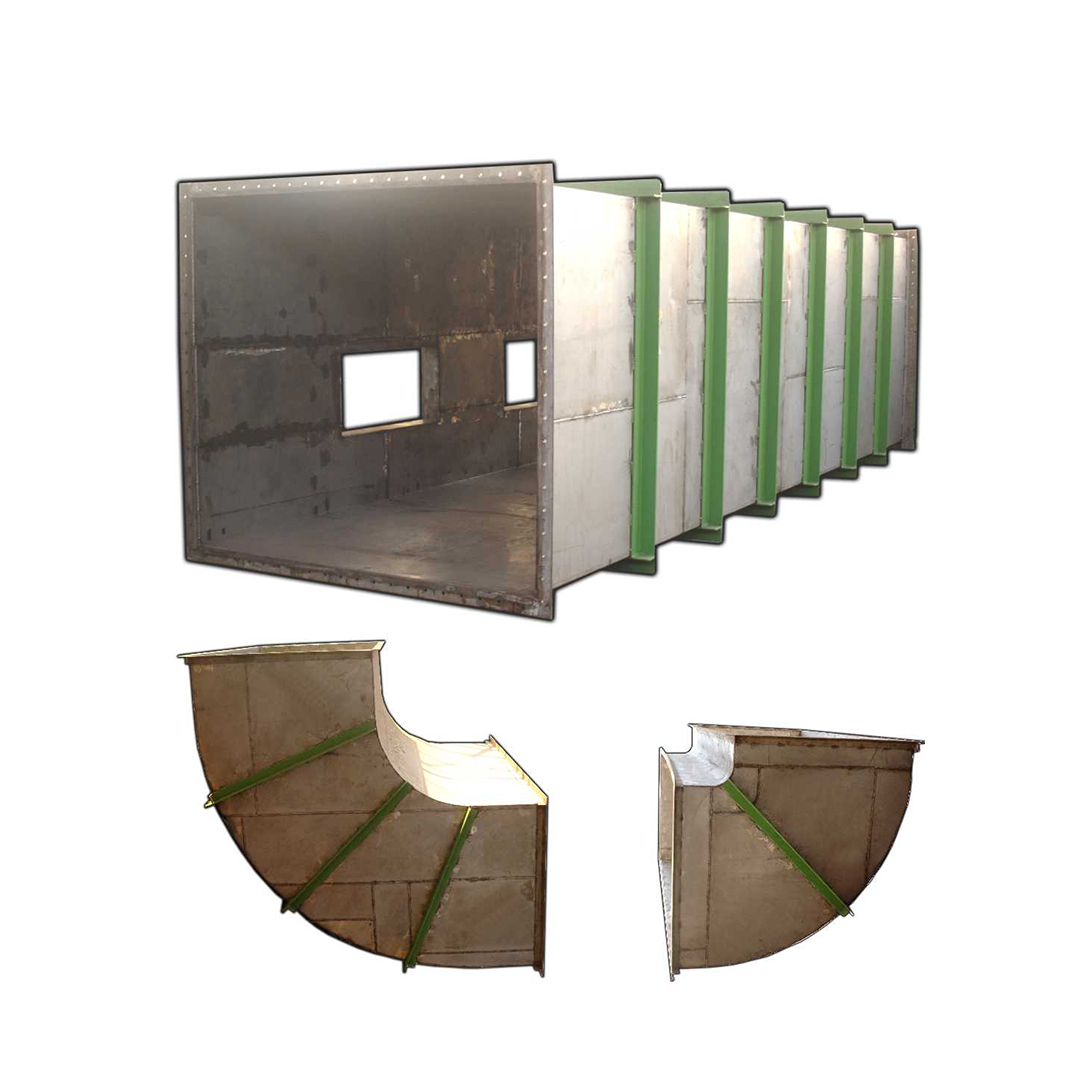
- Process and exhaust ducting spools, including straight runs, elbows, reducers, and transitions.
- Flanged duct connections and damper-interface provisions.
- Inspection doors, supports, stiffeners, and expansion provisions.
- Tie-ins from process equipment to scrubber and stack.
Engineering & Fabrication Features
- Proper stiffening for negative- and positive-pressure zones.
- Drainability and low-point condensate management for wet exhaust.
- Inspection doors, ports, and maintenance-friendly access.
- Modular spool fabrication for faster site installation and alignment.
Material Selection
- Stainless steel grades such as 304 or 316 for corrosive ventilation duties.
- FRP or GRP ducting where strong corrosion resistance is required and duty permits.
- Carbon steel with industrial lining systems where applicable.
- Material and thickness selection based on temperature, chemistry, chlorides, and abrasion.
Quality & Leak Integrity
- Dimensional and interface checks.
- Controlled welding and leak-tight fabrication practices.
- Inspection and testing aligned to project requirements.
- Identification, packing, and modular dispatch planning.
Applications
- Pollution-control and scrubber systems.
- Wet or corrosive industrial exhaust lines.
- Process equipment to stack connections.
- Industrial ventilation and flue gas handling.
Inputs Required
- Normal and maximum gas temperature.
- Gas chemistry, chlorides, moisture, and condensation expectations.
- Required duct sizes, tie-in points, space, and support locations.
- Insulation, cladding, and outdoor exposure requirements.
Fabrication Support
Built around your drawings, duty conditions, and inspection needs.
Share specifications, P&ID, MOC, dimensions, and testing requirements. The NESF team can align fabrication, documentation, and delivery around your project.
Enquiry Form
Request a quote for Ducting & Flue Gas Lines
Share your gas conditions, duct sizes, layout, materials, supports, and insulation requirements.