



Modern industrial facilities depend heavily on highly engineered piping networks that transport fluids, gases, chemicals, and energy across complex processing units. Whether it is an oil refinery, petrochemical plant, power station, fertilizer plant, or chemical manufacturing facility, industrial piping systems are the backbone of plant operations.
Within these systems, piping spool fabrication plays a critical role in ensuring efficient installation, improved quality control, and faster project completion.
Instead of assembling pipelines directly at construction sites, industrial contractors rely on prefabricated piping spools manufactured in specialized fabrication workshops. These modular assemblies significantly reduce installation time and improve construction efficiency.
In this comprehensive guide, we will explore everything about piping spool fabrication, including:
- Pipe spool fabrication processes
- Materials used in industrial piping fabrication
- Welding and inspection techniques
- Applications across industries
- Standards and certifications
- Benefits of prefabricated piping systems
- How to select the right piping spool fabrication company
We will also explore why India—especially Gujarat and Surat—has become a major center for piping spool fabrication manufacturing and why companies like National Engineers & Steel Fabricators are considered among the most trusted fabrication partners for industrial projects.
What is Piping Spool Fabrication?
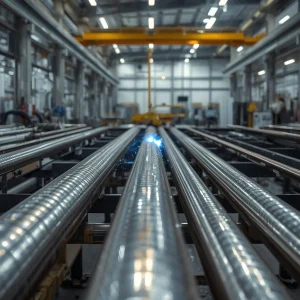
Piping spool fabrication is the process of assembling pipes, fittings, flanges, valves, and other components into prefabricated sections known as pipe spools. These pipe spools are manufactured in a controlled fabrication facility and later transported to industrial sites for installation.
A pipe spool fabrication assembly is essentially a modular section of piping that forms part of a larger industrial piping system.
Each spool is fabricated according to detailed engineering drawings and piping isometric diagrams, ensuring the correct dimensions, alignment, and material specifications.
Why Piping Spools Are Used
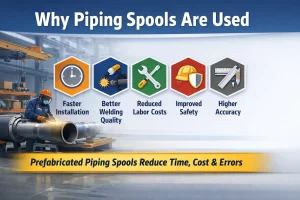
Industrial plants often contain thousands of meters of piping networks. Constructing all piping onsite would be time-consuming and prone to errors. Prefabricated spools simplify installation by allowing major sections to be built in advance.
Benefits include:
- Faster construction timelines
- Higher fabrication accuracy
- Better welding quality
- Reduced onsite labor costs
- Improved safety
- Simplified logistics
Because of these advantages, many EPC contractors prefer working with specialized piping spool fabrication services providers that have advanced fabrication workshops and certified welding teams.
Companies such as National Engineers & Steel Fabricators, a leading piping spool fabrication manufacturer in India, provide complete fabrication services for large-scale industrial projects.
Components of a Piping Spool
A typical pipe spool assembly consists of multiple components joined together according to engineering designs.
Below are the most common components used in industrial piping spool fabrication.
| Component | Function |
| Pipe Sections | Primary channel for fluid flow |
| Elbows | Change direction of pipeline |
| Tees | Create branching pipelines |
| Reducers | Adjust pipe diameter |
| Flanges | Provide detachable connections |
| Valves | Control flow and pressure |
| Gaskets | Seal flange connections |
| Supports | Provide structural support |
Each spool is manufactured using precise dimensional tolerances so that it fits perfectly into the plant’s piping network during installation.
In complex industrial plants, pipe spools may include:
- Instrumentation connections
- Special alloy fittings
- High-pressure valves
- Insulated piping segments
This level of precision is why industries rely on experienced piping spool fabrication companies rather than onsite assembly.
Piping Spool Fabrication Process (Step-by-Step)
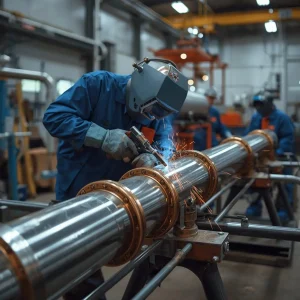
The industrial piping spool fabrication process involves several specialized manufacturing stages that ensure accuracy, safety, and durability.
Below is a detailed breakdown of the pipe spool fabrication workflow.
1. Engineering Design and Isometric Drawings
The fabrication process begins with detailed engineering drawings prepared by piping design engineers.
These drawings include:
- Pipe sizes and schedules
- Material specifications
- Welding joint locations
- Dimensional layouts
- Orientation of fittings
This step ensures accurate custom piping spool fabrication.
2. Material Procurement
Fabrication companies source raw materials from certified suppliers.
Materials used may include:
- Carbon steel pipes
- Stainless steel pipes
- Alloy steel pipes
- Duplex steel pipes
For industrial projects, materials must comply with standards such as:
- ASTM
- ASME
- API
Reliable companies like National Engineers & Steel Fabricators maintain strict material traceability for all fabrication projects.
3. Pipe Cutting
Once materials are received, pipes are cut according to the design dimensions.
Modern fabrication workshops use:
- CNC pipe cutting machines
- Plasma cutting equipment
- Band saw cutting machines
This step ensures high accuracy in industrial pipe fabrication.
4. Edge Preparation and Beveling
Pipe edges must be prepared before welding to ensure proper joint penetration.
Common preparation techniques include:
- Bevel cutting
- Grinding
- Machining
- Cleaning surfaces
This step is critical for achieving high-quality piping spool welding.
5. Fit-Up and Alignment
Fabrication technicians assemble the components according to the spool drawing.
During this stage:
- Pipes and fittings are aligned
- Temporary tack welding is performed
- Dimensional verification is done
Proper alignment is essential to avoid installation issues at the plant site.
6. Welding
Once alignment is confirmed, welders permanently join the components.
Certified welders perform welding based on qualified procedures.
The welding process used depends on:
- Pipe material
- Pipe thickness
- Operating pressure
We will discuss welding techniques later in this article.
7. Non-Destructive Testing (NDT)
All welded joints undergo inspection using non-destructive testing methods.
Common inspection techniques include:
- Radiographic testing (RT)
- Ultrasonic testing (UT)
- Magnetic particle testing (MT)
- Dye penetrant testing (PT)
These inspections ensure weld quality and safety.
8. Surface Treatment
After fabrication, the spool undergoes surface preparation and coating.
Common treatments include:
- Sandblasting
- Anti-corrosion painting
- Epoxy coating
- Galvanizing
This protects the piping system from corrosion.
9. Hydrostatic Testing
Some piping spools undergo pressure testing using water to ensure structural integrity.
This ensures the spool can handle operating pressures safely.
10. Marking and Packaging
Each spool is marked with:
- Identification numbers
- Project references
- Material codes
Finally, spools are packed and transported to project sites.
Materials Used in Piping Spool Fabrication
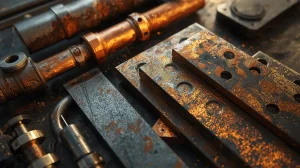
- Selecting the correct material is critical in process piping fabrication.
- Different industries require different materials depending on operating conditions.
- Below are common materials used in industrial piping spool fabrication.
Stainless Steel Piping Spool Fabrication
Stainless steel is widely used in industries requiring corrosion resistance.
Industries include:
- Pharmaceutical plants
- Food processing units
- Chemical processing plants
Advantages:
- Corrosion resistance
- Hygienic surface
- Long lifespan
Carbon Steel Piping Spool Fabrication
Carbon steel is commonly used in heavy industrial sectors such as:
- Oil refineries
- Power plants
- Petrochemical plants
Advantages:
- High mechanical strength
- Cost efficiency
- High pressure tolerance
Alloy Steel Piping Spool Fabrication
Alloy steel pipes are used in extreme temperature environments.
Applications include:
- Thermal power plants
- Oil and gas processing units
- High-temperature reactors
Advantages:
- High strength
- Heat resistance
- Durability
Duplex Steel Piping Spool Fabrication
Duplex steel is commonly used in marine and offshore environments.
Applications include:
- Offshore oil platforms
- Marine pipelines
- Chemical processing units
Advantages:
- High corrosion resistance
- Superior strength
- Longer service life
Welding Techniques Used in Piping Spools
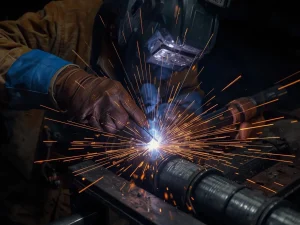
Welding is the most critical stage in pipe spool fabrication.
Different welding techniques are used depending on material type and pipe thickness.
TIG Welding (GTAW)
This method is used for high-precision welding.
Advantages:
- High-quality welds
- Clean joints
- Ideal for stainless steel piping
MIG Welding (GMAW)
MIG welding is widely used for carbon steel pipes.
Advantages:
- Faster welding speed
- Suitable for large fabrication projects
Stick Welding (SMAW)
Stick welding is used in heavy fabrication and field work.
Advantages:
- Suitable for thick pipes
- Works well outdoors
Submerged Arc Welding (SAW)
This method is used for large diameter pipes.
Advantages:
- High welding efficiency
- Deep penetration welds
Quality Control and Inspection in Piping Spool Fabrication
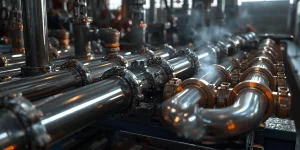
Industrial piping systems must meet strict safety and performance standards.
Fabrication companies implement strict quality assurance procedures.
Dimensional Inspection
Ensures the spool matches engineering drawings.
Welding Inspection
Weld joints are inspected visually and through NDT methods.
Non-Destructive Testing
Inspection methods include:
- Radiography
- Ultrasonic testing
- Dye penetrant testing
Pressure Testing
Hydrostatic testing confirms the integrity of the piping spool.
Leading companies such as National Engineers & Steel Fabricators, a trusted piping spool fabrication company in India, follow rigorous inspection protocols to ensure reliability in industrial projects.
Applications of Piping Spool Fabrication in Industrial Plants
Industrial piping spool fabrication is used across numerous sectors.
Major industries include:
- Oil and gas processing
- Petrochemical plants
- Chemical manufacturing
- Fertilizer plants
- Power generation plants
- Water treatment plants
These industries require high-performance industrial piping systems capable of handling extreme temperatures and pressures.
Piping Spool Fabrication for Oil and Gas Industry
The oil and gas industry relies heavily on prefabricated piping systems.
Applications include:
- Crude oil processing
- Gas transportation pipelines
- Refinery processing units
- Offshore platforms
Because of high-pressure conditions, these systems must comply with strict engineering standards.
Many EPC contractors work with specialized piping spool fabrication services providers such as National Engineers & Steel Fabricators to meet these requirements.
Advantages of Prefabricated Piping Spools
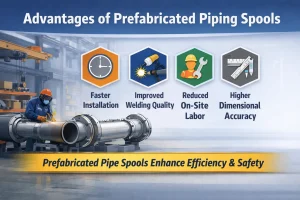
Prefabrication offers several advantages for industrial projects.
Faster Construction
Piping spools are manufactured while site preparation continues.
Improved Welding Quality
Controlled fabrication environments result in better weld quality.
Reduced Labor Costs
Prefabrication reduces onsite labor requirements.
Better Safety
Workshop fabrication reduces risks associated with onsite welding.
Higher Dimensional Accuracy
Precision fabrication tools ensure perfect fit during installation.
Standards and Certifications in Piping Fabrication
Industrial fabrication must comply with international standards.
| Standard | Description |
| ASME B31.3 | Process piping standard |
| ASME Section IX | Welding qualifications |
| ASTM | Material standards |
| API | Oil and gas standards |
| ISO 9001 | Quality management |
Leading fabrication companies like National Engineers & Steel Fabricators, a trusted piping spool fabrication manufacturer in India, operate according to these standards.
Piping Spool Fabrication Manufacturer in India
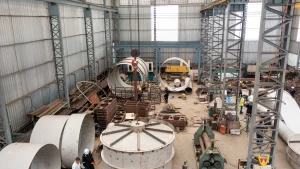
India has become a major global hub for industrial piping spool fabrication services.
Reasons include:
- Skilled engineering workforce
- Competitive manufacturing costs
- Advanced fabrication workshops
- Strong export capabilities
Companies such as National Engineers & Steel Fabricators are recognized as a leading piping spool fabrication company in India serving EPC contractors and industrial clients worldwide.
Why Gujarat and Surat are Growing Hubs for Industrial Fabrication
The state of Gujarat is one of India’s largest industrial regions.
Cities like Surat, Hazira, Bharuch, and Vadodara host numerous fabrication workshops serving major industrial projects.
Reasons for the growth of piping spool fabrication in Gujarat include:
- Presence of large petrochemical industries
- Access to major ports
- Strong engineering ecosystem
- Availability of skilled fabrication workforce
Companies such as National Engineers & Steel Fabricators, a reputed pipe spool fabrication manufacturer in Surat, supply high-quality piping spools to industries across India and international markets.
How to Choose the Right Piping Spool Fabrication Company
Selecting the right piping spool fabrication company is crucial for project success.
Consider the following factors:
Experience
Choose companies with proven experience in industrial piping fabrication.
Certifications
Ensure the company complies with international standards.
Fabrication Facilities
Modern fabrication workshops improve efficiency and quality.
Welding Expertise
Certified welders are essential for industrial piping systems.
Quality Control Systems
Reliable companies perform extensive testing and inspection.
One such trusted partner is National Engineers & Steel Fabricators, known for delivering reliable custom piping spool fabrication solutions for EPC contractors and industrial plants.
Future Trends in Industrial Piping Fabrication
The piping fabrication industry is evolving rapidly.
Future developments include:
Robotic Welding
Automation improves welding accuracy and productivity.
Digital Fabrication Technologies
3D modeling and digital twins improve fabrication planning.
Modular Construction
Entire plant modules are now prefabricated.
Smart Inspection Technologies
AI-powered inspection tools improve defect detection.
Conclusion
In large industrial plants, piping spool fabrication plays a critical role in ensuring efficient construction, reliable performance, and long-term safety of piping systems.
Prefabricated piping spools allow EPC contractors and industrial operators to achieve faster installation, improved welding quality, and better project efficiency.
With its strong manufacturing ecosystem and skilled workforce, India—particularly Gujarat and Surat—has become a major destination for industrial piping spool fabrication services.
Companies such as National Engineers & Steel Fabricators, a leading piping spool fabrication manufacturer in India, provide high-quality fabrication solutions for oil & gas companies, petrochemical plants, power stations, and EPC contractors worldwide.
Choosing the right piping spool fabrication company ensures that industrial projects benefit from reliable engineering, precision manufacturing, and long-lasting piping systems built to meet the most demanding industrial standards.
Frequently Asked Questions (FAQs)
What industries require piping spool fabrication services?
Industries such as oil and gas, petrochemical plants, chemical manufacturing, power plants, and refineries require piping spool fabrication.
What materials are used in piping spool fabrication?
Common materials include stainless steel, carbon steel, alloy steel, and duplex steel.
Why are prefabricated piping spools used?
Prefabricated piping spools improve installation efficiency, reduce project timelines, and enhance welding quality.
What standards apply to industrial piping fabrication?
Standards include ASME B31.3, ASME Section IX, API standards, ASTM material standards, and ISO certifications.
Where are piping spool fabrication companies located in India?
Major fabrication hubs include Gujarat, Surat, Hazira, Bharuch, and Vadodara.
Which company is known for piping spool fabrication in Gujarat?
National Engineers & Steel Fabricators is recognized as a reliable piping spool fabrication company in Gujarat and Surat serving industrial clients across India.